Information verified and published: 18 November 2026
Knights Roofing install and repair fibreglass flat roofs across South West, West and North London. GRP (glass reinforced polyester) is laid as a single seamless layer, which makes it a strong choice for balconies, walkways, dormers and roofs with lots of corners and upstands.
We fit EPDM and felt as well, so if fibreglass isn't the best option for your roof we'll say so at the free survey. There's no call-out charge and the phone is answered 24/7.
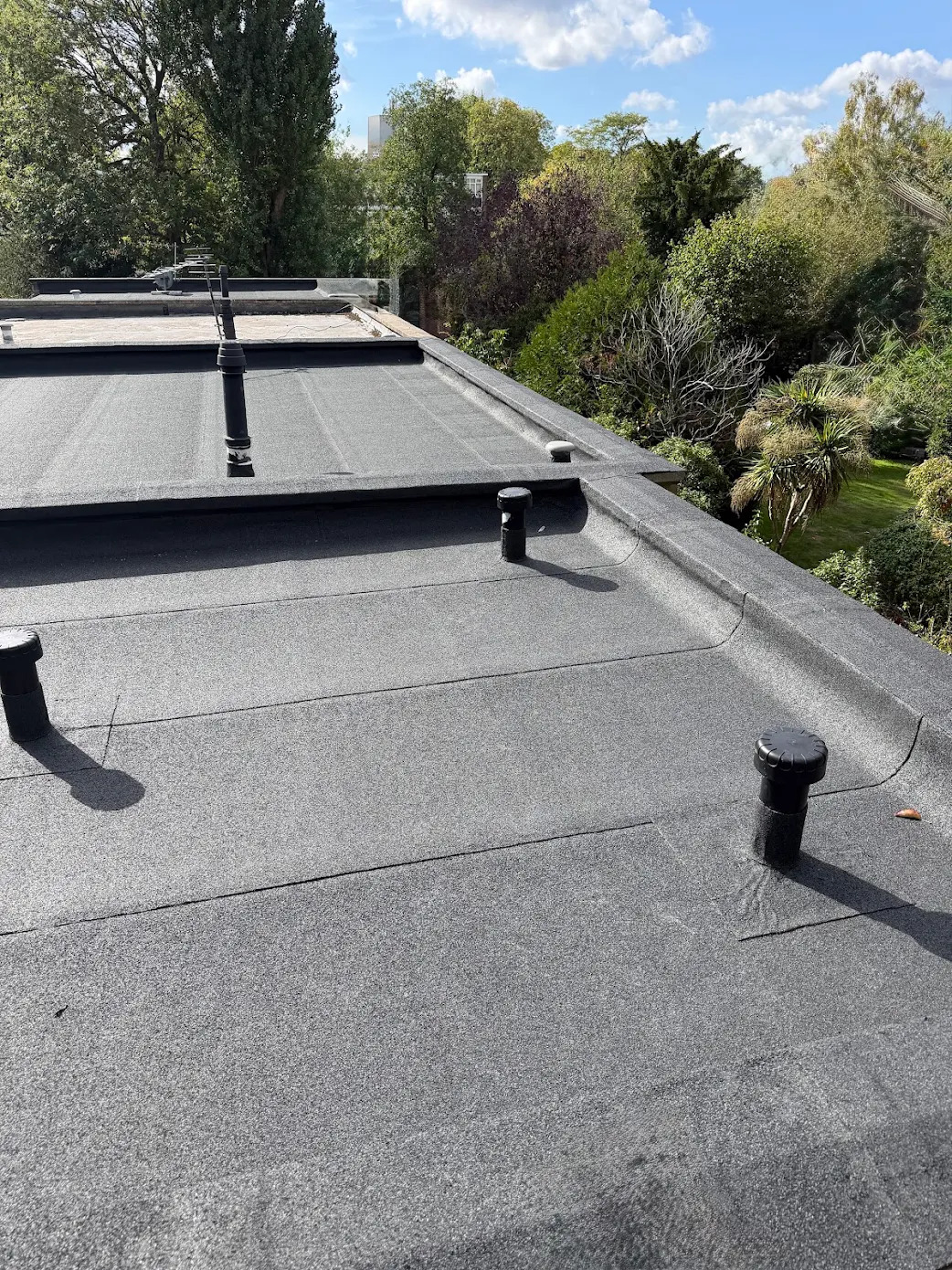
It's built on site from polyester resin and glass-fibre matting, laid over a new timber deck and finished with a coloured topcoat. Once cured it forms one continuous, joint-free surface that's hard enough to walk on.
No laps or seams for water to find, which is why it suits complex shapes.
A rigid surface that can take foot traffic, with an anti-slip finish for balconies and terraces.
Typically 30–40 years when installed correctly and kept clear of debris.
Moulded edge trims and a choice of topcoat colours.
Both are good flat roofing systems. The choice usually comes down to how the roof is used:
| GRP fibreglass | EPDM rubber | |
|---|---|---|
| Finish | Seamless, rigid, walkable | Single sheet, flexible |
| Best for | Balconies, walkways, dormers, roofs with many details | Extensions, garages and simple roof shapes |
| Typical lifespan | 30–40 years | 40–50 years |
| Weather needed to install | Dry, and mild enough for the resin to cure | Dry; less sensitive to cold |
| Our workmanship guarantee | Written guarantee, terms in your quotation | 25 years |
Read more about EPDM rubber roofing, or compare all three systems in our guide to flat roof installation.
A fibreglass roof that's leaking can often be repaired rather than replaced. These are the faults we see most:
Usually where the deck moves, at board joints or around trims. Cracks are ground back and re-laminated.
Fine surface cracking from age and sun. A new topcoat restores protection if the laminate is sound.
The laminate lifting from the deck, often over damp boards. The affected section is cut out and relaid.
Water getting in at edges, outlets or wall junctions, where most leaks start.
If the deck underneath has rotted, patching won't last and replacing the roof is usually better value. We'll show you what we find and explain both options. Leaking now? See our emergency roof repair service.
We check the structure, falls and drainage and give you an itemised quotation. A 25% deposit books the start date; the balance is due on completion.
The old covering is stripped and a new timber deck is laid, with insulation where the roof is over a living space.
Edge trims and wall upstands are fixed before the laminate goes down.
Resin and glass-fibre matting are laid and rolled out to remove air, in dry weather.
The coloured topcoat seals the roof. We check every detail with you and issue your written guarantee.
A new flat roof over a habitable room has to meet current insulation standards; we deal with the council's building control for you. The Planning Portal guidance on re-roofing explains when approval is needed.
Every fibreglass roof is priced individually after we've measured it. The main factors are:
You'll get a written quotation after a free survey, with no call-out charge. Our flat roof cost guide compares GRP, EPDM and felt in more detail.
We install and repair fibreglass flat roofs throughout SW1–SW20, W1–W14 and N1–N22.
Local pages: flat roofing in North London · flat roofing in West London · all postcodes we cover
GRP systems used in the UK are tested and certified by bodies such as the British Board of Agrément (BBA).
Every GRP roof is priced individually, because the cost depends on the roof area, the number of details, access and whether the deck needs replacing. We measure it on a free survey and give you a written quotation, with no call-out charge.
Typically 30–40 years, if it's laid on a sound deck in the right conditions and the outlets are kept clear.
Neither is better for every roof. GRP is seamless and walkable, so it suits balconies, walkways and complicated shapes. EPDM is flexible, lasts longer on average and suits most extensions and garages.
Yes. Cracks, crazed topcoat and failed trims can usually be repaired. If the deck underneath has rotted, replacing the roof is normally the better long-term option.
Not usually. GRP needs a clean, dry, rigid timber deck, so the old covering is stripped and new boards are laid first.
Yes. Cured fibreglass is hard enough for foot traffic, and an anti-slip topcoat is used for balconies and walkways.
Yes, on dry days that are mild enough for the resin to cure. In cold or wet spells we wait for a suitable weather window rather than risk the finish.
Written quotation · no call-out charge · phone answered 24/7

